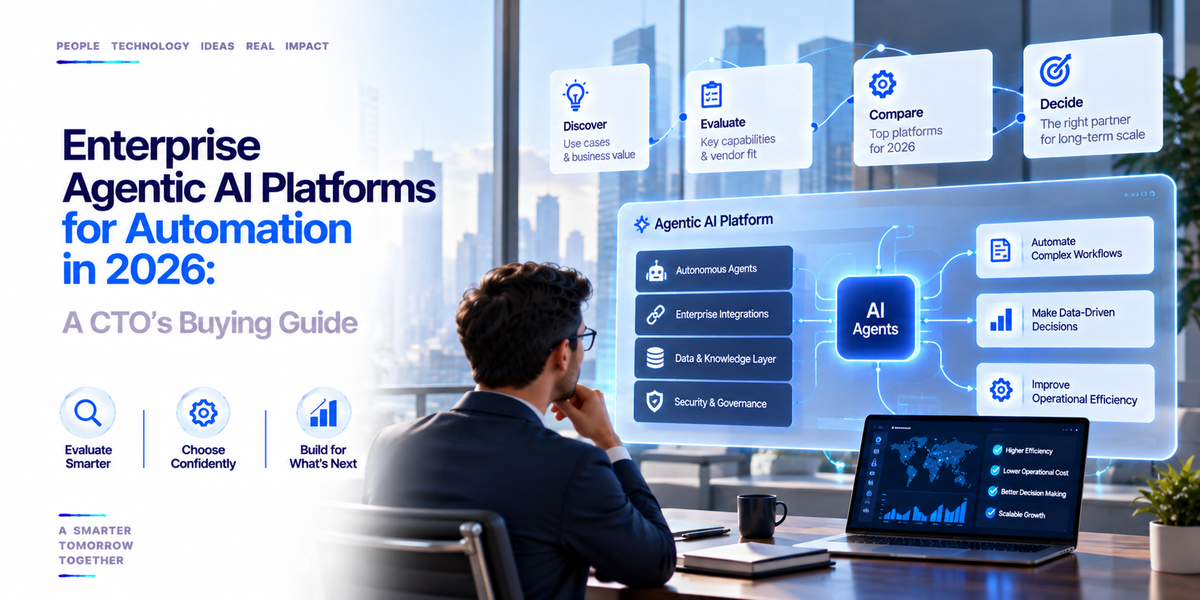

Blueprint Of Business AI Transformation 2026
A practical blueprint for business AI transformation in 2026 — where enterprises are investing, what's blocking adoption, and how teams are sequencing change.

As 2026 approaches, companies no longer see AI as an experiment but as a core strategic requirement. Leaders now integrate AI thoughtfully, teams understand it better, and customers expect faster, more personalized experiences. This shift has resulted in businesses embracing intentional, structured transformation rather than casual experimentation.
Why 2026 Is a Turning Point for Enterprise AI
Market Acceleration & Generative AI
Technical maturity and organizational readiness finally align. Early experimentation created familiarity, and modern AI systems are now stable and predictable. Leaders feel confident investing in large‑scale transformations that align with their long‑term business goals.
Industry Transformation
Finance: AI enables faster data interpretation, early risk detection, and accurate lending decisions.
Retail: Machine learning improves demand forecasting, customer behavior understanding, and supply chain operations.
Healthcare: Digital tools streamline patient data management and decision‑making, helping clinicians focus on care.
Manufacturing: Predictive maintenance prevents downtime, saving money and improving reliability.
Core Pillars of AI Transformation
Intelligent Automation
AI reduces repetitive tasks, organizes information, and removes bottlenecks. Employees gain more time and focus for meaningful work.
Predictive Intelligence
Predictive systems help organizations foresee risks, anticipate changes, and plan confidently. Guesswork turns into clarity.
Workflow Orchestration & Governance
AI tools must work in structured workflows to avoid confusion and miscommunication. Governance ensures transparency, trust, and ethical use of AI.
Essential AI Technologies for 2026
Generative AI
Helps teams brainstorm, review, and communicate more effectively by reducing mental load.
Edge AI
Provides real‑time processing for industries like manufacturing, logistics, and healthcare.
Machine Learning
Strengthens forecasting, uncovers hidden patterns, and improves performance tracking.
AI Roadmap for Businesses
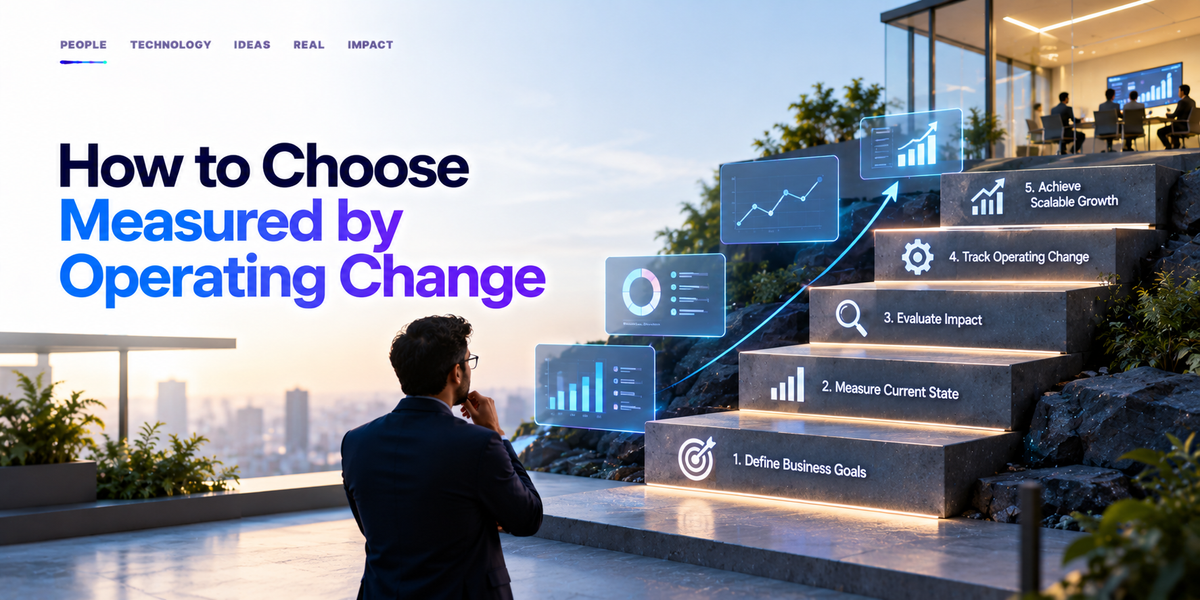
AI Readiness → Planning → Execution
Organizations begin with readiness assessments, then create a strategy with defined goals, followed by structured implementation. Training reduces adoption challenges and empowers teams.
Measure & Scale Responsibly
Evaluating ROI reveals operational improvements, cost savings, and productivity gains. Gradual scaling ensures long‑term, sustainable modernization.
Key Challenges Enterprises Must Overcome
Data Issues: Requires cleaning, organizing, and governing.
Talent Gaps: Training and cross‑functional teams are essential.
Expectation Gaps: Transformation is steady, not immediate; patience and communication drive success.
Examples of Real AI Transformation
Manufacturing: Predictive tools ensure reliable production cycles.
Retail: Inventory accuracy and customer experiences improve with ML.
Finance: Automated compliance and risk management.
Healthcare: Better patient engagement and diagnostic support.
What Leaders Can Expect (ROI)
AI improves efficiency, reduces delays, strengthens decision‑making, and enhances competitiveness.
AI Implementation Checklist (2026)
✔ Infrastructure
✔ Enterprise AI platform
✔ Industry‑specific tools
✔ Workforce training
✔ Responsible governance
✔ ROI measurement
Future Outlook Beyond 2026
AI systems will become more adaptive, self‑optimizing, and autonomous—reducing oversight and supporting continuous innovation.
Conclusion
AI transformation in 2026 is not just technological—it reshapes how companies operate and plan for the future. With a structured roadmap, responsible adoption, and empowered teams, organizations can navigate the coming years with confidence.
FAQ — business AI transformation
What is business AI transformation?
Business AI transformation is the process of re-architecting how a company operates around AI — automating workflows, adding predictive intelligence, and embedding governance — rather than bolting a single AI tool onto an existing process. In 2026 it spans intelligent automation, predictive analytics, and orchestrated, governed workflows.
Why is 2026 a turning point for enterprise AI?
Generative AI has matured from pilots into production, tooling and compute costs have fallen, and enough enterprises now run real deployments that adoption patterns are known. That combination moves AI transformation from experimentation to a repeatable operating model.
What are the core pillars of AI transformation?
Three: intelligent automation (removing manual work), predictive intelligence (forecasting and decision support), and workflow orchestration with governance (coordinating AI across processes while keeping it auditable and compliant).
How should a business start its AI transformation roadmap?
Begin with an AI readiness assessment of data, processes, and skills; plan a small number of high-value use cases; execute with adoption instrumented from day one; then measure ROI and scale responsibly. Sequencing matters more than picking the "best" model.
What are the biggest challenges enterprises face in AI transformation?
The common blockers are fragmented or stale data foundations, adoption gaps where tools do not fit the operator’s desk, unclear ROI measurement, and weak governance. Most failures are organisational rather than technical.
How long does business AI transformation take?
Individual use cases can ship in weeks, but a durable transformation is a multi-quarter programme. The pace depends on data readiness and how quickly the organisation adopts the new workflows, not on model selection.