How to Choose an AI Startup Technical Partner
Looking for an ai startup technical partner? Applore re-architects your business around AI, moving you from strategy to adoption with zero friction.

Finding the right ai startup technical partner requires moving past agencies that simply rent out developers to build basic MVPs. A true partner acts as a co-founder, aligning your technology strategy with your operational reality. At Applore, we believe that while most companies adopt AI we re-architect the business around it, ensuring your systems are built to scale, adapt, and drive measurable performance from day one.
Building a venture or transforming an established enterprise with artificial intelligence is not a matter of plugging in APIs. It requires a deep understanding of how decisions flow, how data is structured, and how human operators interact with automated systems. When you choose a technical partner, you are not just buying engineering capacity; you are securing the architectural foundation of your business.
Built for Organisations Where Technology Affects Performance
We do not build software for the sake of checking boxes or meeting arbitrary launch dates. Our work is specifically designed for companies where technology directly impacts the bottom line, operational margins, and competitive advantage. If your business model relies on the speed, accuracy, and scalability of your digital infrastructure, you cannot afford to treat development as a transactional service.
Many early-stage companies make the mistake of hiring traditional development shops to build their initial product. These shops excel at shipping static features, but they rarely understand the long-term implications of technical debt, model drift, or system integration. As an experienced startup technology partner, Applore arrives before the brief is written. We help you make the critical build-versus-buy decisions, map your north-star economics, and design an architecture that can support rapid growth without requiring a complete rewrite in twelve months.
Whether you are a fast-growing startup aiming to disrupt a category or an enterprise seeking to modernize legacy operations, the goal remains the same: building systems that scale with you. We focus on the entire stack—from the underlying data pipelines and machine learning models to the user interfaces that make adoption inevitable.
Three Deep Practices, One Operating Principle
To deliver enterprise-grade systems that survive real-world production, we organize our capabilities into a unified structure. Our organization is built around three deep practices one operating principle. These practices—Technology Strategy, Platform & Architecture, and Data, AI & Automation—work in tandem to ensure every line of code we ship serves a strategic purpose.
Our operating principle is simple: we do not negotiate the bar. We bring together backend, frontend, platform, mobile, data, and machine learning engineers who ship systems on the architects' line. This integration prevents the common disconnect between high-level strategy and low-level execution.
To understand Applore's background, you have to look at our history. Established in 2013, we have spent twelve years refining our craft. Today, we operate as a 200-operator advisory studio with teams across Noida, Delaware, and London. We operate across three time zones in one continuous shift, ensuring that our clients receive dedicated, senior-level attention throughout the lifecycle of their project. We do not pass your project down to junior developers; our senior systems thinkers shape the long arc of your platform, data, and decision flows.
How We Measure Success: Measured by Operating Change
Many consulting firms and development agencies measure success by deliverables: slide decks presented, story points completed, or code repositories handed over. We reject this metric. We believe that the value of any technology is measured by operating change.
If we build a state-of-the-art machine learning model but your team continues to rely on manual workarounds, the project has failed. True transformation occurs when technology changes how your business actually runs. For example, when we rebuilt the maintenance operations for a 105-country manufacturer with 9 facilities producing 35 million tyres per year, the existing system relied on manual tracking and fragmented ticket management. We deployed a unified dashboard with automated task assignment and real-time workforce monitoring without disrupting active production. The success of that program was not measured by the deployment itself, but by the measurable lift in operational throughput and the elimination of offline coordination.
Our structured approach to delivery ensures that we map the operational reality before reaching for tools. We design integrated systems, not isolated features, because optimizing one surface should not compromise another. To see how we sequence these transformations, you can explore our four phases of delivery which guide every engagement from initial diagnosis to final handoff.
The Lifecycle: Plan, Execute, Adopt
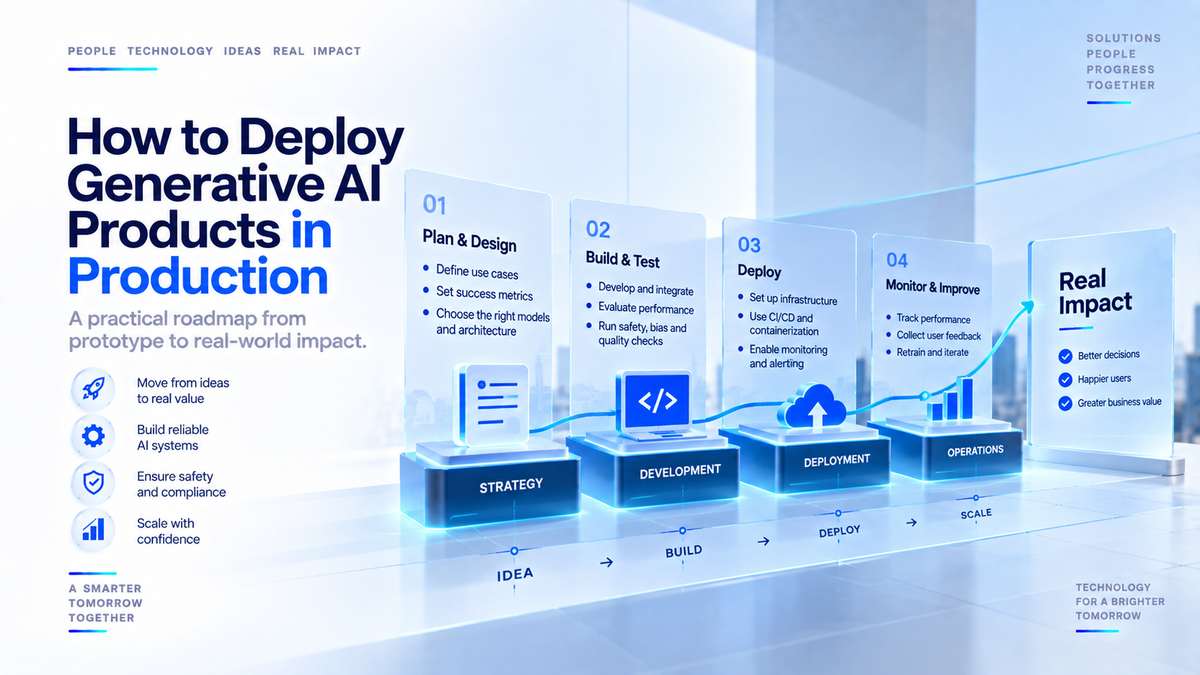
To consistently deliver systems that drive operating change, we follow a rigorous delivery framework. Our framework is straightforward: plan execute adopt. This three-pillar discipline ensures that we remain aligned with your business goals from the initial consultation until long after the system is live.
1. Plan: We arrive before the brief is written. We diagnose your operating model, map your decision flows, and identify where AI and automation can deliver the highest return on investment. We do not push a specific technology stack; instead, we design the system to fit the unique topology of your business. 2. Execute: Our senior engineering pods build the integrated stack. Because we maintain high standards of engineering craft, we build systems that are clean, auditable, and secure. We pick the smallest technology set that can hold the load, avoiding unnecessary complexity. 3. Adopt: Most technology programs fail at handover. We prevent this by embedding adoption from day one. We design intuitive user interfaces, create comprehensive change management narratives, and provide frontline enablement. We stay with you until your in-house team is fully equipped to run and scale the system independently.
This end-to-end ownership is what separates a true technical partner from a staff augmentation vendor. We do not just rent you headcount; we own the outcome of the build.
Key Criteria for Selecting an AI Startup Technical Partner
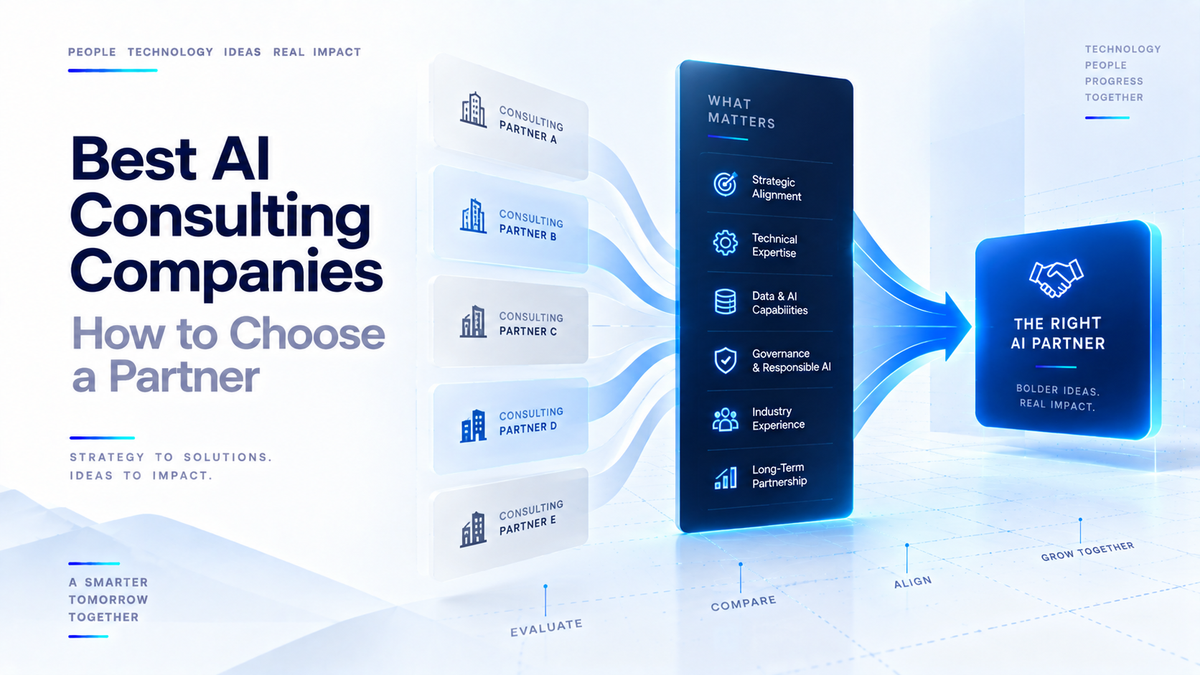
When evaluating potential partners for your AI initiatives, you must look beyond their technical portfolio. You need to understand how they think, how they work, and how they define success. Here are the critical criteria you should consider:
Strategic Alignment Over Feature Lists
Avoid partners who ask for a detailed feature list and immediately start coding. A reliable partner will challenge your assumptions, ask deep questions about your business model, and help you identify what to build and, more importantly, what to cut. They should understand your north-star economics and design technology that supports those financial goals.
Architectural Foresight
The AI landscape is moving at an unprecedented pace. The systems you build today must be designed to absorb the models, regulatory requirements, and operational changes that you cannot yet see three years down the road. Your partner must possess the systems-thinking capability to build modular, flexible architectures that do not lock you into a single provider or framework.
Accountable Engineering Pods
Traditional staff augmentation shifts the integration risk to your internal team. If a rented developer underperforms, it is your problem. Look for a partner that provides cohesive, self-managed engineering pods. These pods should arrive with their own delivery leads, established standards, and operating cadences, allowing them to integrate into your business in days rather than months.
Commitment to Adoption
Ask potential partners how they handle post-launch support. Will they disappear once the code is shipped, or will they stay to monitor real-world performance? A true partner remains invested in your success, helping you navigate the complexities of user adoption, model drift, and system maintenance. At Applore, we are still answering the phone six quarters after a system goes live.
Beyond the MVP: Scaling Your Architecture
For an early-stage startup, shipping an MVP is only the first step. The real challenge lies in scaling that product into a robust, enterprise-grade platform. This transition requires a partner who can guide you through the complexities of data security, regulatory compliance, and system integration.
In highly regulated sectors like financial services, the stakes are incredibly high. You cannot simply stand up a generative AI wrapper and hope for the best. You must consider data privacy, auditability, model risk, and legacy system integration from day one. Whether we are building a marketplace for a $3B aftermarket distributor—digitizing 300+ branches and 100+ vendors—or designing risk assessment models for financial institutions, we apply the same rigorous standards of security and compliance.
We build software that your company owns. We design it once, build it to your exact specifications, and hand over the intellectual property so your team can run it every day. This approach ensures that your technology remains a proprietary asset that compounds in value over time.
If you are ready to build systems that move real work, drive operating change, and scale with your ambition, bring us your brief. Let's design an architecture that positions your business to win.
Frequently asked questions
What does an ai startup technical partner actually do?+
An ai startup technical partner does far more than a traditional development agency. They act as a strategic co-founder, owning everything from initial technology strategy and systems architecture to product engineering, deployment, and long-term adoption. They help make critical build-vs-buy decisions, design scalable data pipelines, and ensure your technology stack aligns with your business's financial and operational goals.
How does Applore differ from a traditional software development agency?+
Traditional agencies typically rent out headcount or build static features based on a rigid brief, leaving the integration and operational risk with you. Applore operates on a different model: we are a senior team of 200 operators who arrive before the brief is written. We own outcomes, not just deliverables, and we stay embedded with your team until the technology is fully adopted and driving operating change.
What does "measured by operating change" mean in practice?+
It means we do not measure the success of a project by story points, slide decks, or lines of code shipped. Instead, we measure success by the actual impact the technology has on your business operations—such as reduced manual tracking, increased throughput, eliminated coordination bottlenecks, and measurable financial returns.
How do you handle the transition from MVP to a scaling enterprise architecture?+
We design your initial MVP with the future target architecture in mind. By avoiding short-sighted technical shortcuts, we ensure that the systems we ship today can absorb the AI models, regulatory changes, and transaction volumes your business will face three years down the road. This prevents the need for costly, ground-up rebuilds as you scale.
Can you work with our existing in-house engineering team?+
Yes. We offer senior engineering pods that embed directly into your existing team and rituals. These pods are self-managed, arriving with their own delivery leads and standards, allowing them to onboard within days and scale your development capacity without the overhead of traditional staff augmentation.
How do you ensure AI models survive real-world production environments?+
We build robust, agentic workflows that include necessary guardrails, evaluation frameworks, and human-in-the-loop systems. We focus heavily on data engineering, model monitoring, and pipeline security, ensuring that the AI operates reliably under live operational pressure without drift or failure.