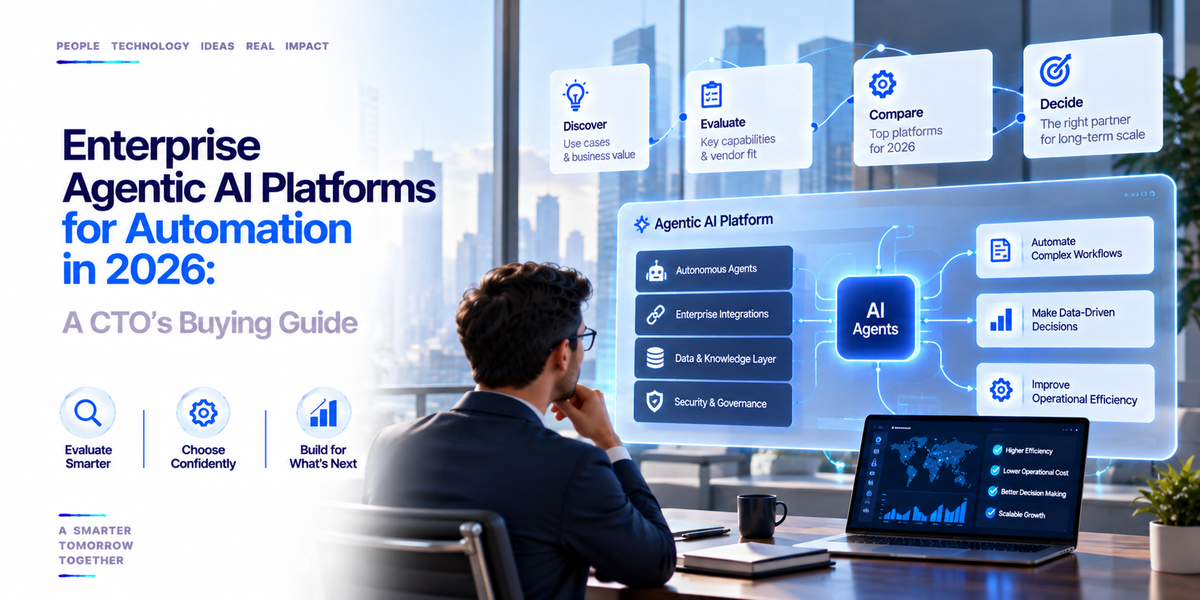

Designing enterprise platform & architecture for scale
Applore Technologies designs resilient platform & architecture systems to help enterprises scale operations, integrate data, and deploy applied AI.

A resilient platform & architecture is the foundation of any enterprise that scales without breaking. At Applore Technologies, we design systems that map directly to your operational reality, ensuring your technology infrastructure compounds value over time instead of creating technical debt. We build integrated stacks where data, models, services, and surfaces work in unison to support long-term operating change.
Built for organisations where technology affects performance
When technology directly impacts the bottom line, standard off-the-shelf software or superficial upgrades are not enough. We design systems specifically built for organisations where technology affects performance. These are enterprises where a single minute of downtime, a fragmented database, or a broken handoff between systems translates directly into lost revenue, stalled production, or operational friction. In these environments, technology is not a support function; it is the core engine of the business.
Consider a multi-plant manufacturing setup operating across 105 countries with 9 facilities producing 35 million tyres per year. Historically, maintenance operations in such environments ran on manual tracking, offline coordination, and fragmented ticket management. A superficial fix would be to buy a generic ticketing app. But for organisations where technology affects performance, the solution requires a unified dashboard with automated task assignment, a structured ticket system, and real-time workforce monitoring—all deployed without disrupting active production.
This level of execution demands a team that understands how decisions actually flow. We are systems thinkers who shape the long arc of platforms, data, and decision flow. Our Noida, Delaware, and London studios house two hundred operators working under one single discipline. We do not just build features; we map the operational reality before reaching for tools. By focusing on the entire system rather than isolated surfaces, we ensure that optimising one part of your business does not compromise another.
Rethinking platform & architecture for the AI era
Most companies adopt AI We re-architect the business around it. This distinction is critical. Simply plugging an AI model into a legacy system creates a disjointed user experience and fragile data pipelines. True transformation requires a complete rethink of your platform & architecture. We don't consult on AI; we architect organisations that compound from it. This means building a foundation where data flows seamlessly, models are integrated natively, and services scale dynamically. The systems we ship today are engineered to absorb the AI, regulation, and topology we cannot yet see in three years.
Our delivery model is structured around the four phases of our approach, ensuring we diagnose the operating reality before we write a single line of code. We run engagements through four geometries, moving systematically from diagnosis to adoption:
- Diagnose the operating reality: We arrive before the brief is written. We map the operating model, decision flow, and north-star economics to understand the environment the technology will live inside.
- Define direction: We establish clear architectural standards and decision-making frameworks, bringing clarity to complex choices that often stall enterprise progress for months.
- Architect the system: We design the integrated stack, selecting the smallest set of tools that holds the load and clears the audit.
- Implement and adopt: We build and deploy the system, embedding adoption from day one so that your internal teams can run with it.
We measure success by adoption and operating impact—not story points, decks, or deliverables. When we build a platform, we remain embedded with your team, disagreeing well when necessary, shipping the actual system, and remaining available to answer the phone six quarters later. This ensures that the transition is seamless and the technology actually delivers on its promises.
Integrating data, ai & automation into core systems
A modern enterprise platform cannot exist in a vacuum. It must be designed to handle the heavy demands of modern data, ai & automation. Many organisations treat these three elements as separate initiatives, resulting in siloed data lakes, disconnected automation scripts, and AI models that never make it to production. We believe in a unified approach: Three deep practices One operating principle. Our comprehensive capability stack spans product engineering across web, mobile, and platform services, alongside technology strategy and applied AI.
By maintaining backend, frontend, platform, mobile, data, and ML engineers on the same line, we ensure that every piece of the system aligns with the overarching architecture. For example, when we digitised a 3-billion-dollar aftermarket business, the challenge was not just building a marketplace. It was about connecting 300-plus branches, 100-plus vendors, and a massive inventory database into a single, cohesive platform. This required deep expertise in data, ai & automation to ensure real-time synchronization, automated order routing, and predictive inventory management.
We pick the smallest technology set that holds the load and clears the audit. The stack may be infinite, but our standard is not. We design platforms that scale with you, ensuring that your data pipelines are robust enough to feed machine learning models, and your automation workflows are reliable enough to run core business processes without manual intervention. This disciplined approach prevents the accumulation of unnecessary software licenses and ensures a clean, maintainable codebase.
Checklist for evaluating your platform architecture
Before embarking on a major system redesign, enterprise leaders must evaluate their current infrastructure. Use this practical checklist to determine if your platform & architecture is ready to support future growth and AI integration:
- Operational Reality Mapping: Have you mapped how decisions actually flow through your organisation before choosing your software tools?
- System Integration over Surfaces: Are you designing integrated systems rather than isolated features? Does optimising one user interface compromise backend database performance?
- Future-Proofing: Can your current platform absorb the AI models, regulatory changes, and structural shifts that will emerge over the next three years?
- Adoption-First Design: Is change management, instrumentation, and frontline enablement embedded into the project from day one, or is it treated as an afterthought during handover?
- Clear Ownership: Do you have named delivery owners for your technology programmes—providing one throat to choke from strategy to adoption?
- Minimalist Stack Selection: Have you selected the smallest, most robust set of technologies that can hold your operational load and clear security audits, or is your stack cluttered with redundant tools?
Partner with Applore Technologies
Great technology is not bought; it is built and adopted. At Applore Technologies, we bring twelve years of compounding craft to every engagement. With a 200-operator advisory studio spanning Noida, Delaware, and London, we have the discipline, roster, and studios required to execute complex enterprise AI and platform programmes. We scale possibilities; we do not negotiate the bar. Let us help you plan, execute, adopt, and build systems that scale with you. Contact Applore Technologies today to discuss how we can re-architect your business for the future.
Frequently asked questions
What is the difference between adopting AI and re-architecting a business around it?+
Most companies adopt AI by plugging isolated models into legacy systems, which often creates fragile workflows. Applore Technologies re-architects the business around AI, designing integrated systems where data, models, services, and surfaces work together to compound operational value.
How does Applore Technologies approach platform & architecture design?+
We map the operational reality and decision flow before choosing tools. We design integrated systems rather than isolated features, ensuring that optimising one surface does not compromise another, and we build platforms to absorb future AI and regulatory changes.
What does it mean to build for organisations where technology affects performance?+
It means designing systems for enterprises where operational efficiency, real-time data flow, and system reliability directly impact business outcomes. Examples include multi-plant manufacturing networks and large-scale aftermarket marketplaces where downtime or coordination gaps carry high financial costs.
How do you integrate data, ai & automation without disrupting existing production?+
We diagnose the operating reality first, then deploy unified dashboards and automated workflows alongside existing systems. For example, we rebuilt maintenance operations for a 105-country manufacturer without disrupting active production.
Why do most enterprise technology programmes fail at handover?+
Most programmes fail because adoption is treated as an afterthought. Applore Technologies embeds adoption from day one through instrumentation, change design, executive narrative, and frontline enablement until the in-house team can ship faster than we did.
How does Applore Technologies measure the success of a platform implementation?+
We measure success by adoption and operating impact, not by story points, decks, or deliverables. Our results are verified at handoff and confirmed at the 90-day mark.
What is the "Plan, execute, adopt" methodology?+
It is our core operating discipline. We arrive before the brief is written to plan the system, execute by building the integrated stack, and embed adoption so the technology actually drives long-term operating change.