Blockchain Smart Contracts is the Future of Fintech in 2023
Published on 02 May 2022
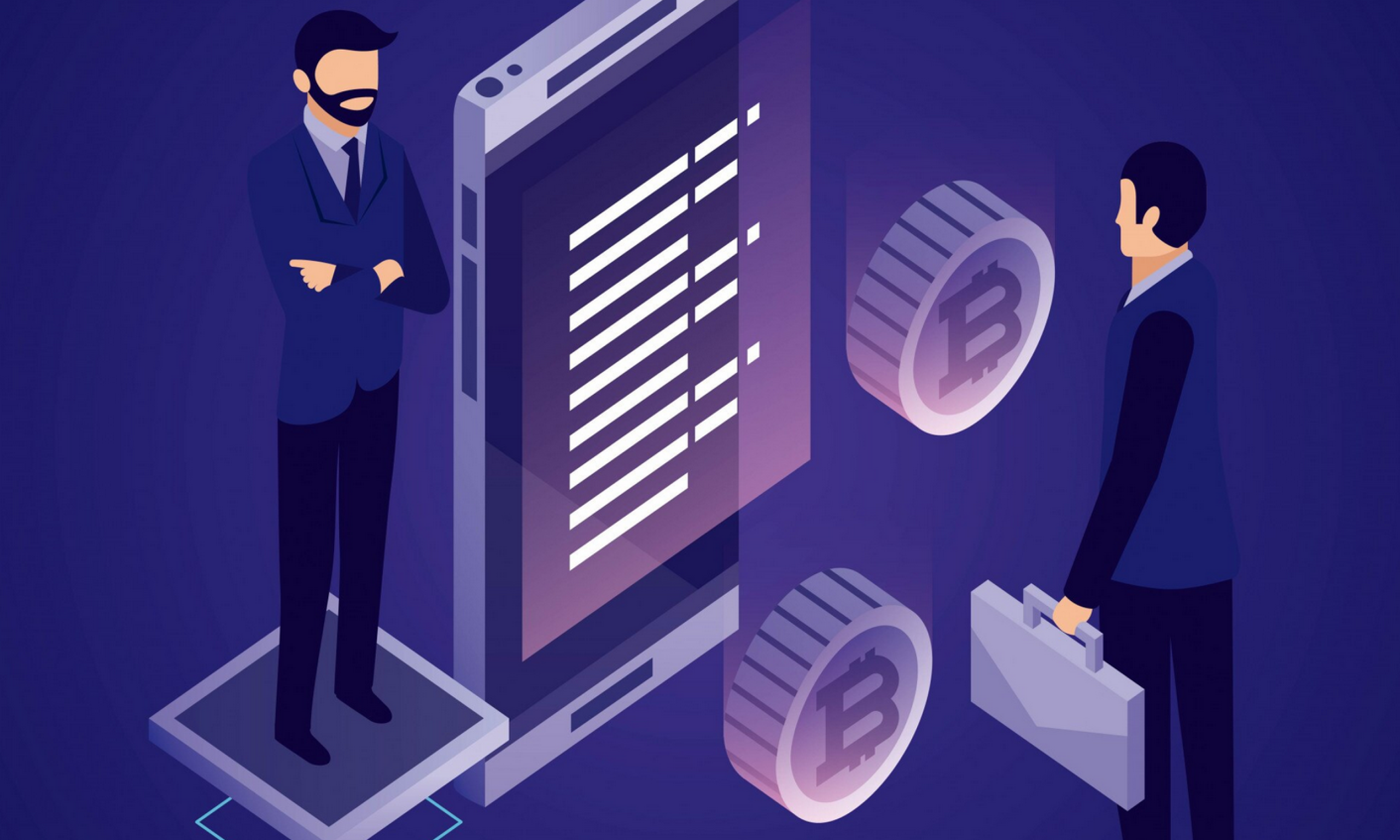



Blockchain technology is the talk of the mouth all over the world. With a wide variety of applications in the real world, blockchain brings a new hope of encouragement in the fintech market. Not only companies have adopted, but also governments do not lag behind in embracing blockchain technology. An appealing feature of blockchain is smart contracts that have taken over the traditional financial instruments.
In addition, smart contracts have streamlined the process of financial and business operations by making them digitised, self-executed, self-disciplined, and with explicit rules and regulations. They increase the performance of fintech procedures without the chance of interfering with third parties or intermediaries in the process of implementation. If you really want to be aware of how smart contracts boost the future of fintech, this guide undoubtedly aids in comprehending how smart contracts can effectively and fruitfully increase financial business.
What exactly are Smart Contracts?
Smart contracts are simply programmes stored on blockchain networks that work on predetermined sets of rules and policies. They typically automate the execution process of the agreement so that an individual gets the outcome in an instant without involving an intermediary or a third party.
Salient Features of Smart Contracts
Smart contracts are a new pattern of agreement signed between two or more parties. Instead of signing a contract between two or more members, they come to a platform where all the parties agree the terms and conditions of them. This contract is irreversible and irrevocable without assent of 50% of the parties. Actually, smart contracts ensure compliance with blockchain technology. This supports the downfall of labour, cost, and time consuming.
A smart contract functions on self-executable code, meaning they do not need humans or trusted parties to fulfil the obligations. The readable terms and conditions convert into machine code in which smart contracts execute full operations.
In these contracts, a network of computers executes and works on a predetermined set of conditions, once they meet and verify, it will go ahead otherwise not. And then the blockchain is updated when the transaction is loaded. When a blockchain is stored, it is not revocable and changeable, but modifiable if more than 50% gives access to the task.
Transactions in a centralised form deal with a lot of trouble, including high transaction costs, fees, time-consuming, and single authoritative nature. There is one cure for all the issues available with smart contracts.
Launching a Transparent Way to Do Business
Smart contracts have revolutionised various industries, which encompass fintech, real estate, supply chain, manufacturing, finance, and telecom. They are one of the important angles to boosting international trade and commerce among the countries. As a consequence, it improves the efficiency and productivity of every business in the world by increasing financial transparency. Other benefits include secure transactions and safety for the configuration.
They give you full flexibility to contract anonymously without any fear of losing credentials. Whenever two unknown parties are met on a single platform, both of them follow the same rules and policies. If someone tries to tamper with these obligations, others will be aware of this fraud immediately. They do not pass on their assent, so the fraudsters will not succeed in their personal motives. That is why it is one of the most secure frameworks.
Ethereum is one of the most successful forums for blockchain technology. Smart contracts work on this platform. It is an open-source platform on which several developers are ready to change or customise their programmes when they find some glitches inside them. The language supports complete features which simplify the creation of more advanced and customised contracts. However, there are numerous platforms that consist of Aeternity, Cardono, and Qtum.
Besides, blockchain technology renders a perfect environment for smart contracts as the data can never be lost, deletable, or erasable. According to Gartner, companies that utilise blockchain-based smart contracts, either voluntarily or imposed, exponentially increase the quality of their data by up to 50%.
Innovation in Blockchain Technology Disrupts the Fintech
Smart contracts are bundled with decentralised characteristics that allow us to use them in making decentralised applications. Most likely in decentralised finance to break the monopoly of some intermediary players, such as banks and governments, in operating fintech activities.The validity of smart contracts is becoming more and more transparent. This new form of agreement raises the security and verification of worldwide transactions by gathering two concepts into a robust idea.
The worldwide use of smart contracts is due to increasing trust and reliable relationships among the parties dealt with. It solves the problems of financial transactions, payment processing, clearing and settlement of financial instruments, and trade finance, as well as regulatory parties who take advantage of smart contracts.
Already, one of the big giants, Paypal, leverages the benefits of cryptocurrencies and smart contracts. It has been reported that it would launch a Super Crypto application to improve financial transactions, payments, settlements, and peer-to-peer connections. Also, the application helps in testing and checking of financial transactions without any hassle.
Contract partners have a higher level of accountability to one another using smart contracts. Without compromising the verification and credibility of the transactions, it comes into play in function.
Smart contracts execute automatically without any need for human intervention. The whole set of credentials related to smart contracts are directly loaded into the distributed ledger, which means they cannot be immutable or unchangeable. It builds trust in the minds of individuals that they enter into impartial contracts.
Blockchain transactions are recorded in an encrypted form, so security features can be integrated with the smart contracts. Apart from that, it automatically duplicates and saves copies of the documents in a safe manner to prevent damage to the files, either through hacking or losing them. Since in a distributed ledger, everybody has the same file in a duplicate form.
There is also some certainty involved because smart contracts execute automatically, eliminating the need to spend time processing paperwork or correcting errors that are manually written in the documents. Smart contracts can be executed in minutes and at a fraction of the cost of traditional contracts.
Automating the flow of digital assets and payments can lead to the development of new FinTech products and business models. Blockchain smart contracts reduce monitoring and enforcement costs, allowing financial institutions to rely less on post-trade financial market infrastructures.
Overall, blockchain smart contracts have the potential to transform the way agreements are made in a variety of industries, particularly in FinTech. However, it will take some time and more development before it can be considered mainstream.
Conclusion
No doubt, blockchain technology is the latest innovation in financial technology. It happens due to having a wide number of advantages and benefits that support the financial companies in performing their work efficiently and effectively. Smart contracts are the best aspect of blockchain technology, which enables financial systems, including insurance, bidding, contracts, agreements, and instruments, to be safe and secure. It provides security and clearance in the verification of data sets, documents, credentials, and files. Both parties feel comfortable and stay away from fraud and money-stealing. If you want to create an application such as blockchain technology smart contracts, Applore Technologies is available to assist you from start to finish at a low cost.
Read more blogs
Blueprint of Business AI Transformation 2026
Enterprise-Grade Custom AI Agent Development: Automate Workflows with Intelligent Autonomous Systems