The Ultimate Guide to Developing Digital Wallet Apps in 2023
Published on 26 May 2022
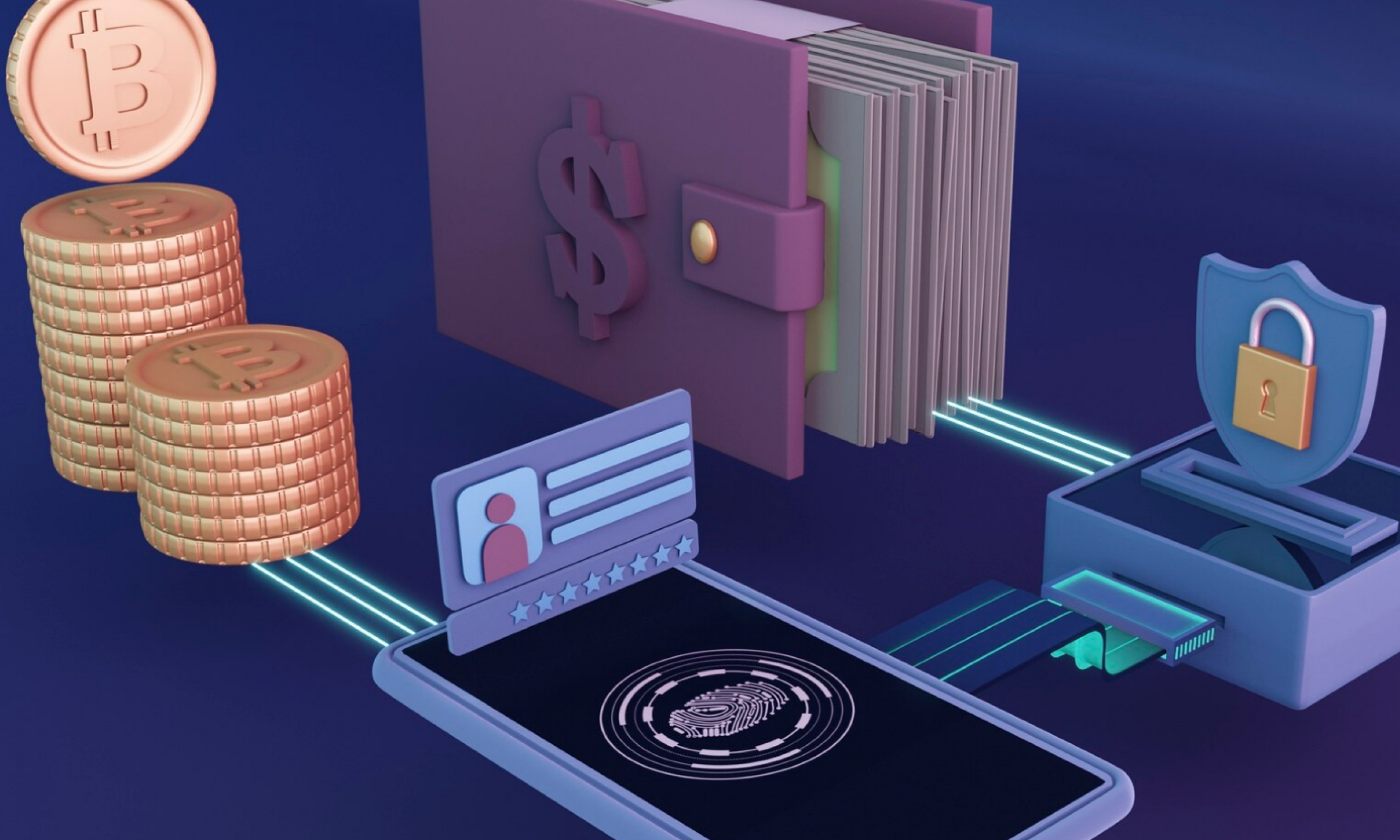



Digital wallets have gained popularity after the coming of the digital ecosystem. They have varieties of functionalities, unique features, and user experiences.
Statista suggested in the study that the market size of the digital wallet apps exponentially boosting from 2020 to 2025. Leveraging of the digital market is very simple by just making a flawless digital wallet. The market size in the North America stands in billions of dollars, but now it is increasing in Asian region. If you want to enjoy the vast environment of fintech technologies, digital wallets are one of the ideas.
The blog guides in every point of aspects including digital app development process, costing, features, and technological stack.
What is a Digital Wallet?
A digital wallet is a software-based financial transaction platform that enables users to do financial transactions on a daily basis. It helps businesses grow exponentially because there is no need to carry physical money in their pockets. It uses credit cards and lets users make purchases using their mobile devices.
With the use of a digital wallet, you can transact money at any time without any hassle. It eliminates the requirement of carrying a physical wallet to store funds, make transactions, and track payment history.
Here is a list of several advantages of digital wallet apps for businesses, such as
- It represents various banks, financial institutions, credit rating agencies, and businesses with an innovative focus.
- Frictionless transactions allow for easy money transfers from one account to another.
- Digital wallets enable feasible transactions to do cryptocurrency trading.
- It makes a smooth procedure to do refunds and easy cancellations.
- It showcases the financial reports of many transactions and deals with financial planning.
- It improves financial security due to the inclusion of several safety features like 28-bit encryption, two-factor authentication, biometrics, and voice initiation.
- eWallet apps provide easy access to money by just scanning the QR codes and entering the registered mobile numbers.
Types of Digital Wallet Apps
Closed Wallet
Closed wallets are designed for a limited number of users; in this case, the amount is stored in the wallet. They are created for a particular
business,app, or website to do its financial transactions. These wallets are approved by businesses to sell their products and services to the target customers.
For example, Walmart Pay
Semi-Closed Wallet
Businesses enter into a contract or agreement with eWallet applications to use their services in their daily operations. It enables merchants and store owners to make transactions at the listed locations only.
For example, Apple, Venmo etc.
Open Wallet
These are the most commonly used eWallets, allowing transactions into different wallets. However, for this, user accounts are mandatory on both the platforms for senders and receivers on the same application.
For example, American Express, Paypal etc.
Cryptocurrency Wallet
The platforms allow users to store and transfer cryptocurrency into several accounts. Like cryptocurrency certificates, users’ public and private keys are also collected in it. There are two categories: cold and hot wallets based on internet connectivity.
Hot wallets work on the internet and are more user-friendly, but they are less secure. whereas a cold wallet functions without the internet and the data is stored offline. Therefore, security is high in the framework and possesses less risk.
Examples: Coinbase, Binance etc.
IoT Wallet
The IoT wallet works with electronic money and virtual currencies. The Internet of things enables wearable devices like smartwatches, wrist watches, etc., or smart appliances like refrigerators.
For instance, Fitbit Pay enables you to access credit and debit cards via your wearable devices.
Key Features to Include in Digital Wallet
Digital wallets are divided into three panels that are used to manage the wallet. These panels include User, Admin, and Merchants. Each panel has its own features and functionalities. For the development of such a platform, you can hire an app development company to deliver promising results without hampering the user experience.
User Panel Features
- Sign up using a social login.
- Chat features with push notifications
- Transact money with the "View History" option.
- Set a payment reminder and pay the bill.
- User authentication
- Add a bank account and check the account balance.
Merchant Panel Features
- Offer loyalty points and rewards.
- Manage staff and employees.
- Payment link generation.
- Dashboard login
- Add or manage products.
Admin Panel Features
- Reporting and auditing
- Point of sale generation.
- Manage staff and employees.
- Payment link generation.
- Manage users and merchants.
- QR code generation.
Step by Step Guide for Digital Wallet App Development
Conduct Market Research
Market research is necessary to identify business needs, technical requirements, competitor analysis, etc. Apart from that, it renders the data about the preferences of the target audience and makes it easier to understand the idea for the conceptualization.
UI/UX Design
The stage of wallet app development supports determining how users can interact with your application. A UI/UX mobile application design helps you out with illustrations, user flows, design mockups, animations, and UX wireframes. With these results, you can understand what the app looks like for end users.
Digital Wallet App Development Phase
After the finalization of the app design, the developers create code for the application's development. The third party integration and custom creation happen in the same stage to deliver the module for the app testing.
App Testing and Launching
After completion of the development of the app module, it is the time to identify bugs and issues that hamper the smooth performance of the application. Developers stay alert while minding that the functions and features remain intact after the improvement of the application and further updates.
Technological Stack for Digital Wallet App Development
Frontend
Kotlin, CSS, Bootstrap, React.js etc.
Backend
Laravel, Nodejs, and Java
Database
MangoDB, MySQL, Hbase, Postgres etc.
Framework
React Native, and Flutter
QR Code Scanning
ZBar Code Reader, ByteScout Barcode.
Analytics
Amazon Kinesis, and Spark.
Cloud Services
Google Cloud, Azure, Salesforce, AWS
Push Notifications
Firebase Cloud Messaging, and Amazon SNS etc.
Geolocation
Google Maps API
Payment Gateway
PayPal, Stripe, and QuickPay.
The Best 5 Digital Wallet Apps for Online Transactions
Apple Pay
Apple pay is designed for only Apple devices, including Apple smartphones, watches, Macs, or web safari. It is part of iOS apps and works on only the iPad, iPhone, and smartwatches.
Users can easily transact money from the devices without any hassle because it functions fully on the particular Apple devices. An iOS app developer integrates with Apple Pay into the iOS store to facilitate direct payment utilising Siri and Messenger. Thus, users can send and transact money easily without any hassle.
It enables wireless communication with point-of-sale systems by launching "tap to pay" transactions via a near field communications (NFC) chip.
On iPhone 8 and later devices, users can add twelve cards, up from eight previously. They can also add store cards, movie tickets, coupons, rewards cards, transit cards, and student ID cards to their wallet and use them in the same way that they would credit or debit cards.
Paypal
PayPal enables online transactions between different parties, individuals, or businesses and individuals. It provides low-cost services and is widely regarded as one of the most secure methods of online payment.
It supports ACH payment processing, which allows for automatic and electronic transactions between parties. It includes features such as interactive online payment platforms, payment tracking, payment scheduling, split billing, and so on.
PayPal maintains a secure network that includes data encryption, vulnerability management, and access control implementation. It also supports Data Tokenization, which protects your sensitive data, and Two-Factor Authentication, which adds an extra security layer.
Furthermore, it benefits developers by providing customization features and seamless integration with merchant accounting software, eCommerce platforms, and ERP systems.
Google Pay
Google Pay is one of the most used digital wallet apps for fast and hassle-free purchasing or downloading applications. Also, it supports secure transactions without sharing the details of credit and debit cards during payment.
Some of the new features of Google Play allow you to split bills and track group expenses to settle easily among group members.
In mobile payment app development, merchants play an important role. Google Play provides several facilities for them. Simple integration, such as the Google Pay API, and faster payment
Furthermore, its card tokenization offers security and prevents fraudulent activities, making customer retention and loyalty easier.
Amazon Pay
Amazon Pay allows its customers to pay for products and services. It is a cloud-hosted payment gateway with the integration of eCommerce platforms such as Shopify, Prestashop, OpenCart, and 3D Cart.
Amazon Pay is an excellent wallet for merchants that accepts UPI, credit or debit cards, EMIs, and pay later options.It supports many devices, such as iOS, Android, and desktop.
You can create an Amazon seller account and use the plug-in code to add Amazon Pay to our eCommerce platform. It offers multiple benefits to customers, like digital bills, discounts, and voice-payment systems.
Binance
Binance is a well-known example of a cryptocurrency wallet that provides the best decentralised exchanges. According to The Block's research, the volume of centralised crypto exchanges will be $14 trillion in 2021.
Because it is a centralised wallet, decision-making authority remains at a specific end of the system. Centralized crypto exchanges store customers' private keys, whereas decentralised exchanges give users ownership of their assets.
It reflects traditional market financial products and provides user-friendly services; thus, users can easily understand it.
With its project Binance chain, Binance is expanding its cryptocurrency wallet development services to the decentralised ecosystem.
Conclusion
eWallets have transformed the market by providing much simpler and faster payment solutions. Given the expected growth in this market, now may be the best time to invest in digital wallet app development ideas. From an app idea to the first working version, mobile wallet app development involves several stages and procedures.
The digital wallet app market is expected to be worth $750.3 billion by 2028, with a large audience using these apps to pay in online and offline stores, pay bills, top up accounts, and so on. As a result, it is best to collaborate with a development firm to put your ideal eWallet into action.
Applore Technologies provides full-service digital wallet app development, including the creation of an eWallet. Our electronic wallet
Read more blogs

Blueprint of Business AI Transformation 2026
Enterprise-Grade Custom AI Agent Development: Automate Workflows with Intelligent Autonomous Systems