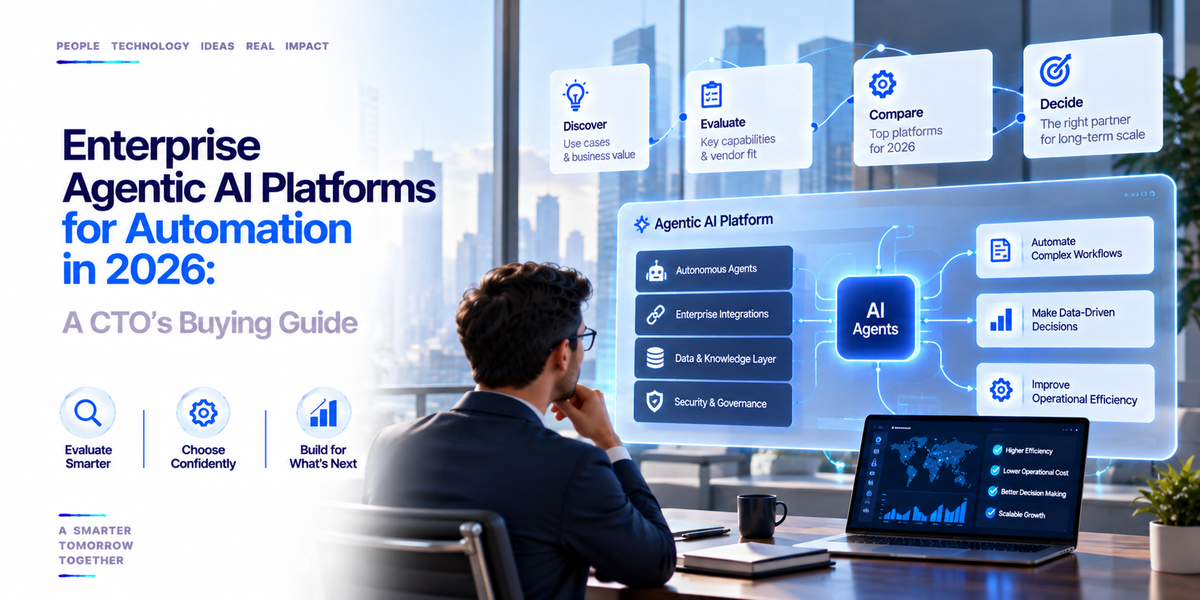

AI consulting enterprise adoption trends 2026
Discover AI consulting enterprise adoption trends 2026 with Applore Technologies. Learn how leading organizations re-architect systems for true operating change

The key ai consulting enterprise adoption trends 2026 point away from isolated proof-of-concepts toward complete operational re-architecting. Organizations are moving past superficial pilot projects to embed intelligence directly into core decision flows and production systems. Successful adoption requires bridging legacy IT architecture with scalable AI platforms, focusing on measurable operational impact, real-time workforce enablement, and long-term maintainability without disrupting ongoing enterprise operations.
Key AI consulting enterprise adoption trends 2026
As enterprises evaluate their technology investments, the shift from tactical experimentation to systemic integration has become the primary benchmark of success. Early AI initiatives frequently stalled in pilot loops because organizations treated machine learning models as add-ons to existing software layers. In 2026, enterprise leadership demands systems that absorb autonomous capabilities, complex regulatory shifts, and evolving data topologies seamlessly.
Modern enterprise architecture requires a shift in focus from model parameters to decision flow. AI strategy now centers on how information moves across business units, how frontline workers interact with automated outputs, and how operational risk is managed across distributed environments. Organizations are standardizing on integrated platforms where data pipelines, governance controls, and execution agentic workflows operate in unison.
Another major shift is the move away from vendor lock-in toward flexible, modular infrastructure. Modern enterprises refuse to compromise system reliability for shiny interfaces. They require robust platforms capable of handling high throughput, multi-region compliance, and deep legacy integrations while offering clear, auditable decision paths.
Who this transformation is built for
These shift patterns are built for organisations where technology affects performance directly. When operational downtime, inefficient resource distribution, or fragmented communication directly erodes revenue and market share, off-the-shelf software and generic advisory decks fall short.
This level of integration is essential for:
- Multi-plant manufacturing networks: Global operations managing multi-facility production lines, complex shift allocations, and preventative maintenance across dozens of countries.
- Heavily regulated institutions: Financial services, healthcare providers, and insurance platforms requiring strict compliance monitoring, auditability, and risk control alongside agentic automation.
- Large-scale aftermarket and distribution networks: Complex B2B ecosystems coordinating thousands of branches, diverse supplier bases, and unified transactional marketplaces.
- Enterprise platforms scaling under heavy load: Organizations facing structural bottlenecks in legacy backend architectures that prevent rapid feature deployment or reliable data ingestion.
When decision velocity directly impacts the P&L, organizations cannot afford isolated dashboards or unvetted AI tools. They require systems designed around operational reality.
How Applore Technologies drives enterprise AI adoption
Applore Technologies was founded in 2013 with a quiet conviction: that great enterprise technology was being diluted by superficial consulting and fragmented delivery. Operating as a 200-operator advisory studio with presence across Noida, Delaware, and London, Applore Technologies brings twelve years of compounding craft to complex technology challenges.
We arrive before the brief is written. Strategy begins by mapping the operational reality, assessing decision flows, and defining north-star economics long before selecting software tools. Architecture starts with understanding how work actually gets done across the organization.
Our team brings backend, frontend, platform, mobile, data, and ML engineers together alongside senior systems thinkers and product designers on a single weight class. By deploying named delivery owners—providing one clear point of ownership per programme—we ensure execution aligns perfectly with the initial blueprint. Learn more about our team and history through Applore Technologies about us.
Re-architecting systems over isolated surfaces
Most companies adopt AI; we re-architect the business around it. Installing a standalone LLM interface or a basic predictive widget does not alter an enterprise's unit economics. True transformation occurs when core processes are restructured so intelligence compounds across every touchpoint.
Real success must be measured by operating change rather than deliverable decks, story points, or surface-level features. For example, consider a multi-plant manufacturing setup operating across 105+ countries with 9 facilities producing 35 million tyres per year. Maintenance operations originally relied on manual tracking, offline coordination, and fragmented ticket management across disjointed systems.
Rather than adding another superficial tracking tool, the underlying operational flow was unified. A centralized dashboard with automated task assignment, structured ticket management, and real-time workforce monitoring was built and deployed without disrupting active production lines. Operational clarity replaced manual friction.
Similarly, in a $3 billion aftermarket sector, unifying 300+ branches and 100+ vendors into a single marketplace required deep backend, platform, and data architecture work. To explore how we build these robust platforms, review the Applore Technologies capabilities.
Related offerings and execution framework
To help enterprises achieve predictable performance, our work spans three deep practices, one operating principle across three foundational surfaces:
1. Technology Strategy: Defining operational topology, system boundaries, decision paths, and financial targets before writing code. 2. Platform & Architecture: Engineering scalable, resilient backend and data systems built to absorb future technology cycles and compliance requirements. 3. Data, AI & Automation: Designing applied AI, generative tools, and agentic workflows that integrate directly into enterprise infrastructure.
Our delivery model follows a strict sequence: plan, execute, adopt. Most technical programs fail during the transition to internal teams. We mitigate this by embedding adoption mechanisms from day one—incorporating system instrumentation, change design, and frontline enablement into the development cycle.
To see how this structured framework is applied across real-world client engagements, read about our four phases approach at Applore Technologies.
Practical checklist for enterprise AI transformation in 2026
For enterprise technology leaders preparing their organizations for 2026, the following checklist outlines the essential steps for successful AI integration:
- [ ] Map decision flows before choosing tools: Document exactly who makes key operational decisions, what data is required, and where manual latency occurs.
- [ ] Audit data pipelines for enterprise readiness: Ensure underlying data stores are structured, accessible, and governed by strict access permissions before feeding ML models.
- [ ] Define concrete operational metrics: Replace vague efficiency goals with specific targets, such as reducing ticket resolution times, minimizing downtime, or accelerating transaction settlement.
- [ ] Design for uninterrupted production: Select architecture patterns that allow new intelligent services to deploy alongside legacy systems without operational downtime.
- [ ] Assign single-point delivery accountability: Establish named owners across both strategy and engineering to prevent handover friction.
- [ ] Embed user adoption into early sprints: Involve frontline operators in interface design and workflow testing to make adoption natural rather than forced.
- [ ] Build for future absorbency: Ensure platform components can integrate upcoming agentic frameworks, regulatory mandates, and topology changes over a three-to-five-year horizon.
Partner with Applore Technologies
Navigating AI adoption trends requires a partner that values engineering precision and operational impact over buzzwords. Applore Technologies builds systems that scale with your organization, mapping operational reality and shipping platforms designed to compound in value over time.
Reach out to Applore Technologies today to discuss your platform architecture, AI strategy, and operational goals with senior systems thinkers who deliver lasting change.
Frequently asked questions
What are the primary ai consulting enterprise adoption trends 2026?+
The primary trends in 2026 focus on shifting from isolated AI pilots to full business re-architecture. Key priorities include embedding AI into core decision flows, modernizing underlying data architectures, ensuring strict governance and auditability, and focusing on measurable operational change over deliverables.
How does Applore Technologies approach AI consulting differently?+
Applore Technologies does not focus on superficial advisory decks or standalone tools. We map the operational reality before selecting technology, re-architecting underlying systems so organizations can compound value from AI over time.
What does it mean to measure success by operating change?+
Measuring success by operating change means evaluating technology initiatives on tangible business metrics—such as reduced downtime, lower cycle times, automated task assignments, and workforce adoption—rather than completed story points or deliverables.
How does Applore Technologies deploy solutions without disrupting production?+
Applore Technologies designs integrated platform architectures that run parallel to existing operations. By mapping workflows and testing robustly before handoff, systems like task assignment dashboards and asset management platforms are deployed seamlessly into active manufacturing environments.
What industries does Applore Technologies serve?+
Applore Technologies serves organizations where technology directly affects performance, including multi-plant global manufacturing, complex aftermarket networks, financial services, healthcare, and high-scale digital platforms.
What is the team structure at Applore Technologies?+
Applore Technologies operates as a 200-operator studio across Noida, Delaware, and London. Teams consist of senior systems thinkers, backend, platform, data, and ML engineers, alongside product designers and named delivery owners.