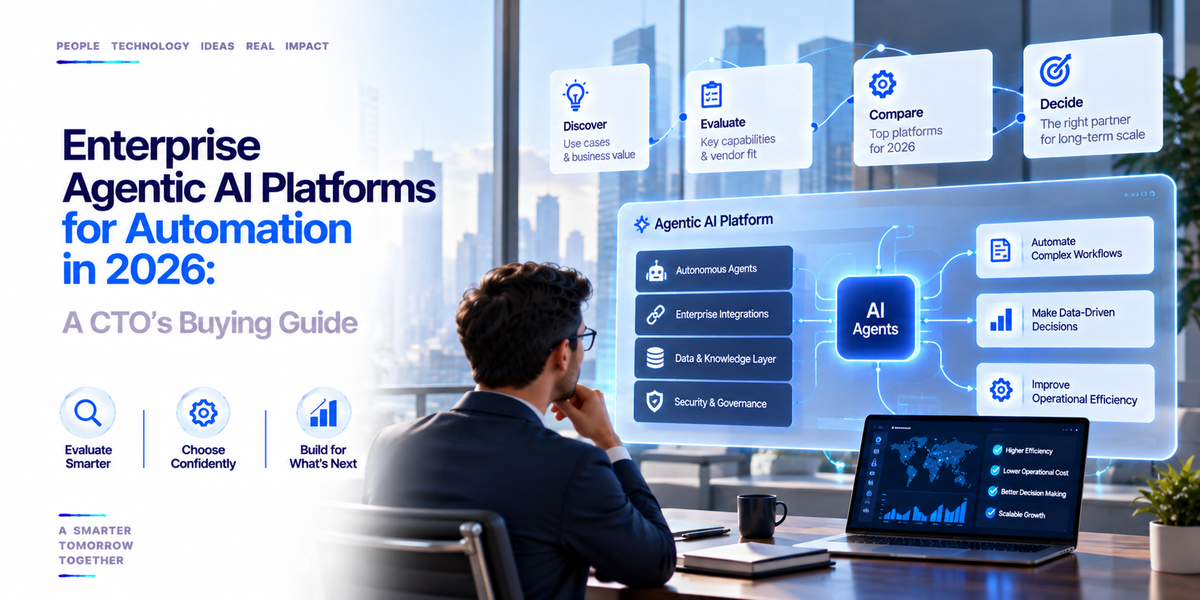

How to choose plan execute adopt for your enterprise
Discover how to choose plan execute adopt operating models with Applore Technologies to transform modern architecture, data systems, and enterprise AI.

Understanding how to choose plan execute adopt methodologies requires evaluating how technology drives operational performance. Organizations must look beyond isolated deliverables to choose partners who diagnose decision flows, execute robust architectures, and embed frontline adoption until change compounds measurable business value.
Enterprise technology programs frequently stall not because the initial software build was flawed, but because the operating model surrounding it was ignored. When an organization attempts to modernize legacy systems or integrate artificial intelligence without aligning decision structures and execution teams, systems become fragmented. Selecting a methodology that connects strategic planning, technical execution, and organizational adoption is essential for sustaining long-term operating impact.
How to Choose Plan Execute Adopt Frameworks for Enterprise Scale
When evaluating operational frameworks, executive teams must examine whether a methodology addresses the complete lifecycle of technical transformation. A effective framework does not treat strategy, engineering, and rollout as disconnected handoffs. Instead, it operates across three unified phases: Plan, Execute, and Adopt.
Phase 1: Plan
Planning must begin long before technical requirements or vendor briefs are written. Effective planning maps operational realities, internal decision flows, and core unit economics. Rather than selecting tools prematurely, leaders must evaluate how decisions move across business units and design the target system to support that flow. Selecting a methodology in this phase requires ensuring that advisors arrive ready to challenge assumptions, map root causes, and define clear economic north stars.
Phase 2: Execute
Execution demands that platform operators, software architects, data engineers, and interface designers collaborate within a single operating discipline. Many initiatives falter when high-level strategy decks are handed over to outsourced engineering groups that lack architectural context. Choosing a execution framework means requiring named delivery owners—a single point of responsibility across the program—and ensuring backend, frontend, mobile, and machine learning components are shipped cleanly on the architect's line.
Phase 3: Adopt
Adoption is the ultimate metric of enterprise software success. Most transformation programs struggle at handover because change management is treated as an afterthought. An integrated approach embeds instrumentation, user onboarding, change design, and frontline enablement into the development cycle from day one. System success should never be measured by story points completed or slides delivered, but by verified operating change and frontline utilization.
Built for Organisations Where Technology Affects Performance
Not every business requires deep technical re-architecting. However, for companies where system uptime, platform throughput, data accuracy, and workflow latency directly dictate margin and revenue, off-the-shelf software patches are insufficient. The discipline of modern engineering is built for organisations where technology affects performance directly across complex operating topologies.
Consider multi-plant industrial environments. In a global enterprise operating across 105+ countries with 9 facilities producing 35 million tyres per year, maintenance operations historically relied on manual tracking, offline coordination, and fragmented ticket management. A single delayed maintenance event or lost work order can halt production lines, incurring massive financial drag.
Modernizing an environment of this scale requires building a unified dashboard featuring automated task assignment, structured ticketing, and real-time workforce monitoring. Crucially, engineering teams must deploy these platforms without disrupting active production schedules. By utilizing a structured engagement methodology, complex multi-facility enterprises can bridge the gap between legacy operational reality and modern software architecture.
Similarly, consider a $3B automotive aftermarket enterprise operating across 300+ physical branches and 100+ vendors. Legacy systems created friction across inventory visibility, supplier dispatch, and point-of-sale pricing. Transitioning this scale of operation into a unified marketplace requires balancing distributed branch workflows with centralized data orchestration. When technology directly impacts commercial throughput, technology strategy and business architecture must be built as one.
How Applore Technologies Executes Strategy to Adoption
Applore Technologies was founded in 2013 with a quiet conviction: enterprise technology was being compromised by fragmented consulting models that separated advice from delivery. Over twelve years of compounding craft, the studio has grown into a team of two hundred operators across three studios in Noida, Delaware, and London.
Applore Technologies operates under a clear mandate: Most companies adopt AI We re-architect the business around it. Rather than treating modern capabilities as superficial features layered over inefficient processes, the firm works through Three deep practices One operating principle and structures work across Four engagements, four geometries.
Clarity Before Technology
Applore Technologies maps the operational reality before selecting tools. Architecture begins with how decisions actually flow through an organization. Senior systems thinkers work alongside internal teams to shape platforms, data structures, and operational boundaries that remain resilient as enterprise requirements evolve.
Systems Over Surfaces
Isolating user interfaces from underlying backend systems creates operational drag. Applore Technologies designs integrated systems where optimizing one surface does not compromise another. Engineering teams pick the minimal technology set required to support the operational load, pass security audits, and maintain reliable performance.
Measured by Operating Change
Delivering code is not the endpoint. Success is measured by long-term adoption and operational transformation. Systems are built to absorb AI shifts, regulatory updates, and architectural topology changes that may arise three to five years down the line. Delivery teams embed directly with client organizations, establish operational metrics, and confirm system performance at 90 days and six quarters post-launch.
Platform & Architecture and Data, AI & Automation Capabilities
Modernizing enterprise operations requires deep expertise across interconnected technical domains. Enterprise transformations succeed when core practices support one another within a unified delivery pipeline.
``` +-------------------------------------------------------------------------+ | TECHNOLOGY STRATEGY | | Operating Model Mapping | Decision Flow | North-Star Economics | +-------------------------------------------------------------------------+ | v +-------------------------------------------------------------------------+ | PLATFORM & ARCHITECTURES | | Scalable Microservices | Resilient Topology | Multi-Surface Systems | +-------------------------------------------------------------------------+ | v +-------------------------------------------------------------------------+ | DATA, AI & AUTOMATION | | Agentic Workflows | Automated Dispatch | Real-Time Dashboards | +-------------------------------------------------------------------------+ | v +-------------------------------------------------------------------------+ | FRONTLINE ADOPTION | | User Enablement | System Instrumentation | Verified Operating Impact | +-------------------------------------------------------------------------+ ```
Platform & Architecture
A resilient platform & architecture forms the backbone of any scalable enterprise. Systems thinkers must design technical foundations capable of handling transaction volumes, complex permissions, and multi-region deployments. When building large-scale platforms, engineers balance throughput with maintainability, ensuring that future teams can extend the codebase without introducing technical debt.
By leveraging an integrated technology stack, organizations avoid building brittle integrations. Platforms are architected to ensure that mobile applications, web portals, internal management tools, and partner APIs consume clean, standardized data pipelines.
Data, AI & Automation
Integrating data, ai & automation requires moving beyond simple conversational interfaces or superficial pilots. Applied intelligence must automate complex, multi-step business decisions, route tickets dynamically, optimize logistics pathways, and detect operational anomalies in real time.
When AI capabilities are architected directly into enterprise workflows, operational data compounds in value over time. Automated task assignment and intelligent queue routing allow frontline staff to focus on critical exceptions rather than manual administrative tracking. This approach transforms static data repositories into active operational engines.
Practical Checklist for Enterprise Technology Selection
When evaluating technology partners and methodologies for enterprise-wide initiatives, use this operational checklist to ensure alignment across strategy, execution, and long-term adoption:
- Evaluate Decision Mapping Capabilities: Ensure the team analyzes existing decision flows, operational bottlenecks, and unit economics before recommending specific tech stacks or tools.
- Require Single-Point Program Ownership: Verify that the engagement assigns named delivery owners to maintain single-point accountability from initial architecture through to post-launch operations.
- Audit Architectural Longevity: Confirm that the proposed platform architecture is designed to accommodate shifts in topology, data security regulations, and AI capabilities over a 3- to 5-year horizon.
- Embed Frontline Adoption Metrics: Ensure that adoption goals, user training, system instrumentation, and operational KPIs are integrated into early project sprints rather than left for post-release handoff.
- Demand Integrated Delivery Teams: Validate that software architects, data engineers, frontend developers, and product designers operate under a unified discipline rather than disconnected vendor silos.
- Verify Long-Term Operational Support: Confirm that the delivery partner remains engaged past release, reviewing operational metrics at 90 days and maintaining accountability through subsequent operational cycles.
Re-Architecting for Sustainable Scale
Selecting the right framework to plan, execute, and adopt enterprise technology is the foundation of long-term operational resilience. Organizations that align software architecture with business decision flows build systems that scale cleanly and compound value over time.
Applore Technologies brings twelve years of discipline to complex enterprise software challenges. By integrating technology strategy, platform architecture, and applied AI into a unified operating model, Applore Technologies helps leaders build resilient platforms that drive measurable operating change. Explore Perspectives on technology, AI, and operating systems with Applore Technologies to transform your core operational platforms.
Frequently asked questions
What does how to choose plan execute adopt mean for enterprise technology?+
It refers to a structured methodology for selecting software transformation frameworks that unify initial operational planning, technical system execution, and frontline organizational adoption into a single continuous discipline.
Why is Applore Technologies built for organisations where technology affects performance?+
Applore Technologies specializes in environments where system uptime, data accuracy, and workflow efficiency directly drive revenue, margins, and yield, such as multi-plant manufacturing and large-scale commercial marketplaces.
How does Applore Technologies approach platform & architecture design?+
Applore Technologies designs integrated platform architecture focused on long-term resilience, mapping decision flows before selecting tools to ensure systems absorb future AI, regulatory, and topological shifts.
What is the role of data, ai & automation in enterprise re-architecting?+
Rather than deploying isolated AI tools, Applore Technologies embeds data, AI, and automation directly into core decision workflows, enabling intelligent task assignment, real-time monitoring, and compound operating efficiency.
How does Applore Technologies ensure system adoption after launch?+
Applore Technologies embeds adoption engineering from day one through system instrumentation, frontline training, and change design, tracking success by verified operating impact at 90 days and six quarters post-launch.
Where are Applore Technologies' studios located?+
Applore Technologies operates with 200 operators across three studios located in Noida, Delaware, and London.
How does Applore Technologies manage complex enterprise projects without disrupting production?+
Applore Technologies uses named delivery owners and phased deployment geometries that map live operational realities, allowing systems to be deployed alongside active manufacturing or multi-branch operations without downtime.