
Agentic AI in Manufacturing & Field Ops: Lessons From the Plant Floor
Agentic AI is transforming manufacturing and field operations by helping teams automate complex workflows, respond to real-time conditions, and make faster operational decisions. This blog explores practical lessons from the plant floor, including predictive maintenance, quality control, workforce coordination, supply chain optimization, and the governance needed to deploy AI agents safely at scale.

Manufacturing is not a clean software environment, and anyone who tells you otherwise has never stood on a plant floor at shift change.
The systems are older. The processes interlock in ways no diagram fully captures. The data lives in six places, three of them offline. Operators work under real time pressure, and machines can't be taken down just because a new digital workflow wants testing. An AI agent that dazzles in a controlled demo can fall apart in a real factory where machines, people, maintenance crews, ERP systems, quality processes, inventory and field conditions all interact continuously.
We know because we've shipped software into exactly these environments at Applore, across tyre plants, safety equipment operations and multi-country manufacturing setups. And here's what that experience taught us: the opportunity for agentic AI in manufacturing is genuinely large, but the path to it runs through the plant floor, not the pitch deck.
Manufacturers generate enormous operational information: maintenance records, production schedules, quality observations, machine telemetry, inventory movements, workforce availability. The problem was never information. It's that someone, or something, has to turn information into action. A dashboard says "Machine 17 needs attention." An agent identifies the asset, checks maintenance history, verifies the spare part is in stock, finds a qualified technician, prepares the work order, escalates if production impact crosses a threshold, and updates every system involved. That's the difference between visibility and coordination, and coordination is where the value lives.
But, and this is the whole article in one sentence, autonomy must be introduced around real workflows, not around impressive demonstrations. Here are the lessons that separate the deployments that work from the ones that get quietly switched off.
Why manufacturing punishes casual AI
Three characteristics make factory environments unforgiving to AI agents designed elsewhere.
First, mistakes are expensive. A wrong recommendation in a marketing workflow wastes a few hours; a wrong action on a plant floor creates downtime, quality failures, safety risk or serious financial loss. Second, everything is connected: maintenance affects production, production affects inventory, inventory affects procurement, and quality affects customer commitments, so a small change in one workflow ripples somewhere else. Third, the plant floor has physical reality. Software retries; a production line doesn't.
Design for reliability, context, escalation and physical constraints from the start, or the operators will do the risk assessment for you by ignoring the system.
Lesson 1: Understand the plant before automating it
The least exciting lesson, and the one that decides everything downstream: never automate a process you don't understand.
A workflow that looks simple on the process diagram hides dozens of informal decisions. The operator who knows Machine 12 runs differently after a bearing change. The technician who's learned that a recurring fault actually starts at an upstream component. The supervisor who knows exactly which production window can never be interrupted. None of that lives in the ERP. It lives in twenty years of human experience, and an agent deployed without it will be confidently, systematically wrong.
So before any agent goes live, map the formal workflow and the informal one: decision points, exceptions, dependencies, human approvals, system boundaries, physical constraints, failure modes. In our experience, this mapping exercise doesn't just de-risk the AI project. It usually surfaces the biggest improvement opportunities on its own, which is the same workflow-first discipline we apply to every project when building enterprise AI agents, factory or not.
Lesson 2: Coordination before autonomy, always
The temptation is full autonomy on day one. Manufacturing rewards the opposite: a graduated path where the agent earns each level of authority.
Start with the agent as coordinator: it identifies relevant maintenance tickets, summarises machine history, recommends priority, checks technician and parts availability, and prepares the work order, while a human approves the final action. Once the organisation has watched how the agent behaves across a few hundred real cases, selected actions graduate to automation.
The path is to assist, then recommend, then coordinate, then execute. And here's the part vendors won't tell you: not every workflow needs to reach the final stage. Some are best left at "recommend" forever, and knowing which is a judgment call, not a technology limitation.
Lesson 3: Integration beats the model, every time
Manufacturing AI conversations obsess over models. Which LLM? Whose reasoning is strongest? What's the latency? Relevant questions, and almost never the deciding ones.
An agent that can't reliably reach the systems where work actually happens is a very articulate paperweight. A real plant environment spans ERP, MES, CMMS, CRM, inventory, quality management, IoT platforms, supplier systems, field-service tools and legacy applications nobody dares touch. The agent creates value only when it can safely coordinate across that landscape, which makes enterprise architecture, connectors, permissions and data flows the real project. The agent isn't the solution; it sits inside a larger operating system, and the operating system is what you're actually building. This is also why the build versus buy decision for AI agents tilts toward custom in manufacturing more than in almost any other vertical: no off-the-shelf platform ships with connectors to your particular 2009 MES.
Lesson 4: Maintenance is your beachhead
If you're choosing a first workflow, choose maintenance. It naturally contains the multi-step structure agents are good at, detect, diagnose, prioritise, assign, schedule, prepare, execute, record, learn, and most organisations already hold data for every step, however fragmented.
Picture it running: a machine shows an abnormal pattern, the agent checks whether it resembles previous failures, confirms the spare part is in stock, finds a qualified technician free in the required window, and hands the supervisor a prepared recommendation. Nobody was removed from maintenance. The coordination burden around them collapsed, and that's the point.
What JK Tyre taught us
Our published engagement with JK Tyre is worth pausing on, because it explains why we keep insisting on operational foundations.
The environment: maintenance operations across a large, multi-facility, multi-country manufacturing footprint. The problem was never a lack of technology enthusiasm; it was that maintenance coordination ran on manual tracking, offline coordination and fragmented ticket management. Our work centred on a unified dashboard, automated task assignment, structured ticketing and real-time workforce monitoring, and the published results show faster task assignment and sharply reduced manual reporting.
Here's the honest lesson: that wasn't an AI-agent deployment, and that's exactly why it matters. Good agentic AI begins with the same operational spine. If tasks, ownership, tickets and workforce information are fragmented, dropping an AI agent on top doesn't solve the problem; it automates the confusion. Build the operating spine first. Add autonomy where it earns its place. Companies that skip step one fund very expensive science projects.
Lesson 5: Field operations are a different design problem
Field ops add a layer plant-floor thinking doesn't cover. A field worker is at a customer site or a remote location, often with poor connectivity, handling equipment, following safety procedures, juggling multiple jobs and reporting to a central ops team.
A field-service agent therefore needs far more than conversational intelligence: mobile access, reliable synchronisation, role-based permissions, context-aware recommendations, offline and low-connectivity behaviour, clear escalation, structured work orders and full auditability. An agent with brilliant recommendations but no access to service history is limited; one with the history but no offline reliability is equally limited. Design the workflow end to end, from the truck to the back office, or don't ship it.
Lesson 6: Safety is engineered, never featured
Industrial environments demand a bluntness worth stating plainly: AI never gets unrestricted authority just because a workflow is repetitive. Safety-related decisions need explicit rules, human verification, certified procedures, strong authentication, complete audit trails and fail-safe behaviour, designed in, not bolted on.
Our KARAM Safety engagement shows what engineered trust looks like in industrial practice: QR-based verification, live API data, visual ID matching, OTP-secured access and a full digital audit trail. The broader lesson outlives the specific technology: in industrial operations, trust has to be engineered into the workflow itself. Agentic AI should strengthen that principle, never dilute it, and any vendor who treats safety controls as a configuration checkbox should be shown the door.
Lesson 7: Bounded autonomy, spelled out
A manufacturing agent needs its authority written down in four tiers.
What it can observe: machines, tickets, inventory, schedules, service records, approved production data.
What it can recommend: maintenance priority, scheduling options, technician assignment, escalations.
What it can execute: only predefined, low-risk, reversible actions.
What requires approval: anything with financial, safety, production, legal or customer impact.
That's bounded autonomy: the agent moves fast inside the lines and stops at them. It's the same permission-tier architecture we've detailed in our framework for AI agent governance, and in manufacturing the stakes make it non-negotiable rather than best-practice.
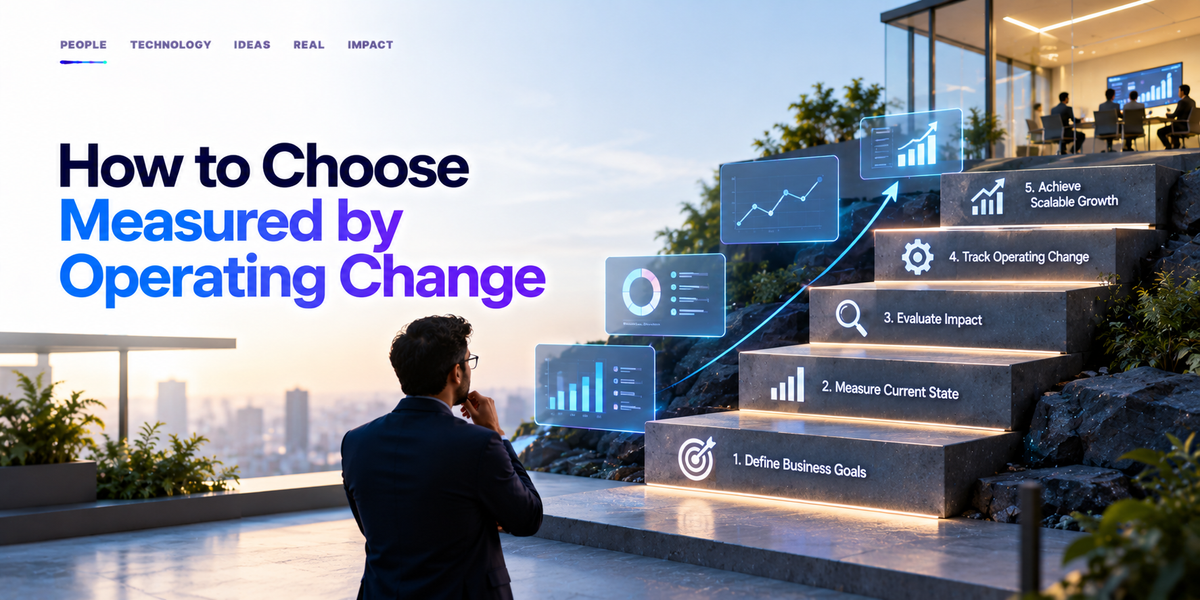
Lesson 8: Measure the operating change, not the agent count
Manufacturing leaders should never judge an AI programme by agents deployed. The questions that matter are operational: Did downtime decrease? Did maintenance response and first-time fix rates improve? Do technicians spend less time hunting for information? Did planning accuracy rise, manual coordination fall, throughput move, quality issues decline?
These metrics tie AI to the operating model, and they're the manufacturing-specific version of the measurement discipline we've laid out fully in our guide to AI agent ROI metrics. Start with the business problem, work backward to the technology, and let the agents earn their expansion through evidence.
Where the value concentrates
Across our deployments, the high-value use cases share one pattern: multiple steps needing coordination across multiple systems. Maintenance coordination, prioritising issues, matching technicians and parts, updating workflows. Quality investigation, correlating incidents with production records, maintenance events and materials history. Production planning support, catching conflicts between schedules, capacity, inventory and maintenance. Spare-parts management, monitoring usage and preparing replenishment before shortages bite. Field-service coordination, matching jobs to technicians by availability, location, qualifications and equipment. Service documentation, turning field notes into structured records. Operational reporting, compiling shift, plant and regional summaries from a dozen systems.
The pattern is never "AI everywhere." It's AI where coordination is the bottleneck, which in most plants is a shorter but far more valuable list than the vendors' brochures suggest.
Architecturally, a production-ready system stacks six layers: data (ERP, MES, CMMS, IoT, quality, inventory), agent (reasoning and workflow coordination), tools (APIs and business applications), control (permissions, approvals, escalation), observability (logs, metrics, incidents) and, crucially, the human layer of supervisors, technicians and engineers. The purpose was never removing expertise from manufacturing. It's making expertise easier to apply consistently, across every shift, every plant, every time zone.
The roadmap
Six phases, in order, with no skipping. Map the workflow, finding the delays, manual coordination and information gaps. Establish the data foundation, connecting operational data and removing the worst fragmentation. Start with recommendations, letting the agent observe and suggest before it acts. Introduce controlled actions, automating only low-risk, reversible steps. Add monitoring, tracking errors, overrides, escalations and business outcomes. Then, and only then, expand carefully into higher-value workflows, once the evidence shows the operating model works.
Notice that autonomous execution arrives in phase four, not phase one. That sequencing is the difference between an operating capability and a cautionary tale, and it's the same discipline behind every workflow in our broader map of agentic AI use cases for enterprises.
The plant floor is the real test
Agentic AI won't succeed in manufacturing because a model produces impressive responses. It succeeds when an operator, supervisor, technician or field worker says: "this actually makes my job easier, and I can trust what it does." Earning that sentence takes process understanding, systems integration, permissions, data quality, operational context, human oversight and measurable outcomes, which is why the best manufacturing AI programmes look less like science projects and more like operating-model transformations. The agent is one component. The real product is a better way of running the operation.
So don't start by asking what the AI agent can do. Start by asking what the operation needs to do better. That single shift in perspective is what turns agentic AI from an experiment into a capability.
If you're weighing AI for your plants or field operations, talk to Applore. We've built the operating spines and the agents on top of them, in real multi-facility manufacturing environments, and we'll walk your actual workflows with you: where coordination is costing you, which use case earns autonomy first, and what the data foundation needs before any agent goes near your MES. Bring us your messiest maintenance process; that's usually where the best business case is hiding.
Frequently Asked Questions
What is agentic AI in manufacturing?
AI systems that understand operational goals, reason across information, interact with connected systems and coordinate or execute multiple steps within defined boundaries, in areas like maintenance coordination, field-service scheduling and quality investigation.
Frequently asked questions
What is agentic AI in manufacturing?+
AI systems that understand operational goals, reason across information, interact with connected systems and coordinate or execute multiple steps within defined boundaries, in areas like maintenance coordination, field-service scheduling and quality investigation.
How can AI agents help manufacturing operations?+
By coordinating maintenance, analysing production data, supporting quality investigations, managing field-service workflows, assisting planning and cutting the manual coordination between enterprise systems and operational teams.
Is agentic AI safe for factory environments?+
Yes, when autonomy is bounded by permissions, approval rules, monitoring and human oversight. Safety-critical and high-impact decisions require stronger controls than routine administrative actions.
What manufacturing processes are best suited for AI agents?+
Workflows with repetitive coordination across multiple systems: maintenance scheduling, service management, spare-parts coordination, quality investigations, operational reporting and field-service dispatch.
Does manufacturing need to replace existing systems to use AI agents?+
No. Agents typically work as an orchestration layer across existing ERP, MES, CMMS, CRM, inventory and quality systems through secure integrations and APIs.
How should manufacturers measure AI-agent ROI?+
Through operational outcomes: downtime, maintenance response time, first-time fix rate, throughput, quality performance, manual coordination effort and field-service productivity, never by counting AI interactions or hours saved alone.