Agentic KYC and Customer Onboarding: Automating Verification Without Weakening Compliance
Explore how Agentic AI can streamline KYC and customer onboarding by automating document verification, data extraction, identity checks, and workflow orchestration. Learn how financial institutions can use AI agents to accelerate onboarding while maintaining compliance controls, auditability, data security, and human oversight where it matters most.
Customer onboarding is often the first real operational experience someone has with a financial institution. If it's fast and intuitive, customers move forward. If it means repeated document uploads, unclear errors, and manual verification delays, they abandon it.
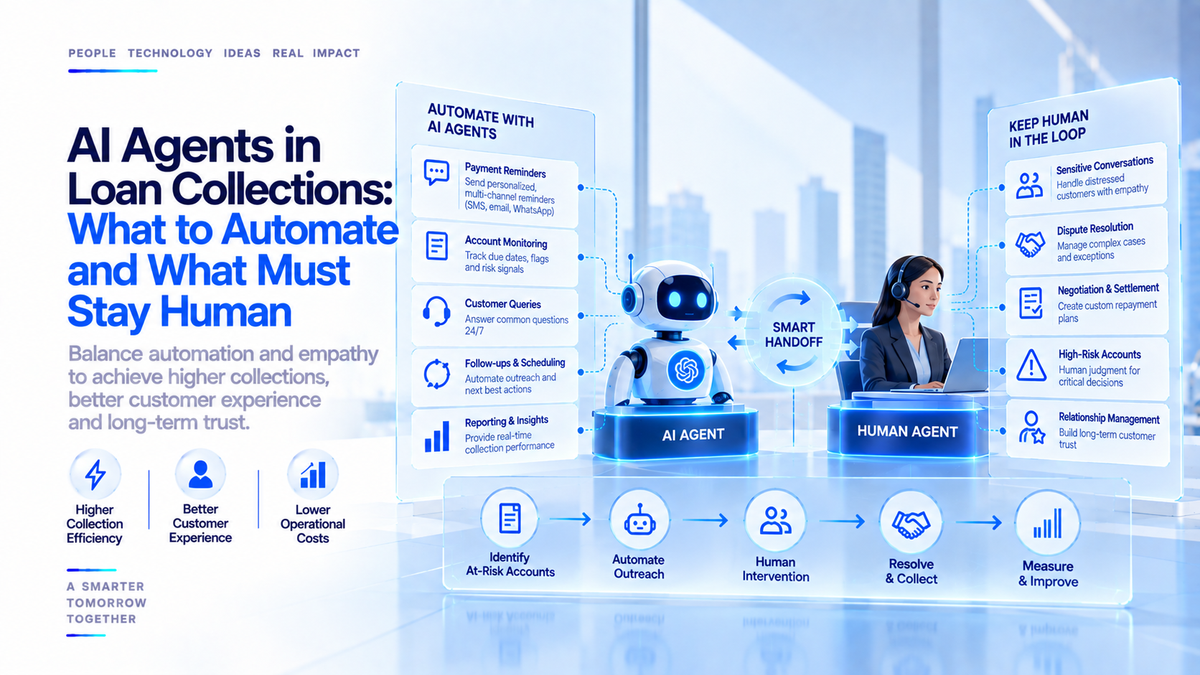
That's the opening for agentic AI KYC automation. Agents can coordinate document collection, verification, data validation, exception handling, and workflow routing. But KYC is regulated, so the objective is to automate workflow complexity, not remove compliance accountability, the same balance the finance agentic AI hub applies across the sector.
What it is, and why KYC suits agents
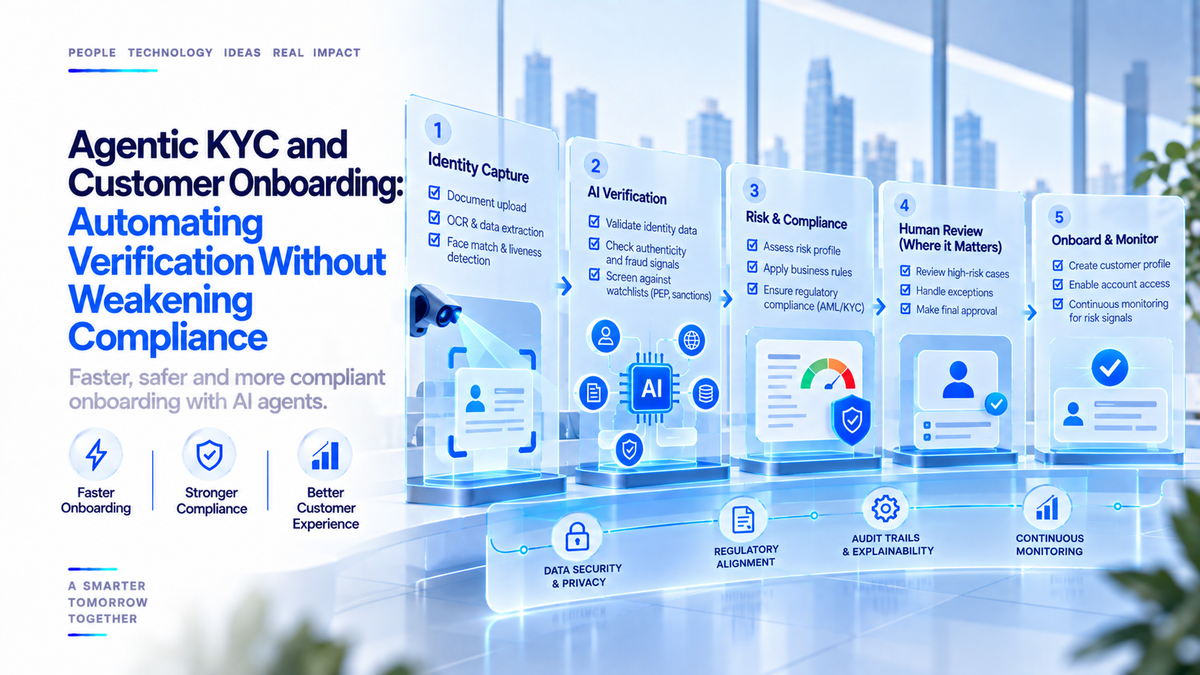
Traditional automation might confirm a document was uploaded. An agentic system coordinates a wider workflow: customer submits application, documents collected, information extracted, data validated, missing information identified, checks initiated, exception routed, onboarding status updated, acting as an orchestration layer between the customer, verification systems, and internal teams. KYC suits this because it carries large document volumes, repetitive checks, structured rules, multiple data sources, frequent exceptions, and measurable processing times, so the agent handles routine steps while compliance focuses on unusual cases.
Verification, onboarding, video KYC, and AML
Document verification, AI can extract name, address, dates, identification details, document type, and expiry, but extraction is not verification, the data still has to pass validation rules that decide whether it's acceptable under the institution's process.
Onboarding, an agent acts as workflow coordinator, deciding which documents are required, whether information is missing, which step comes next, whether the application can proceed, and whether human review is needed, so instead of "your application cannot proceed," it can pinpoint the one missing document and guide the customer.
Video KYC adds complexity: AI can support capture, extraction, quality checks, routing, agent assistance, and fraud indicators, but high-risk verification decisions aren't simple image-classification problems and need controls around identity, consent, security, auditability, and regulation.
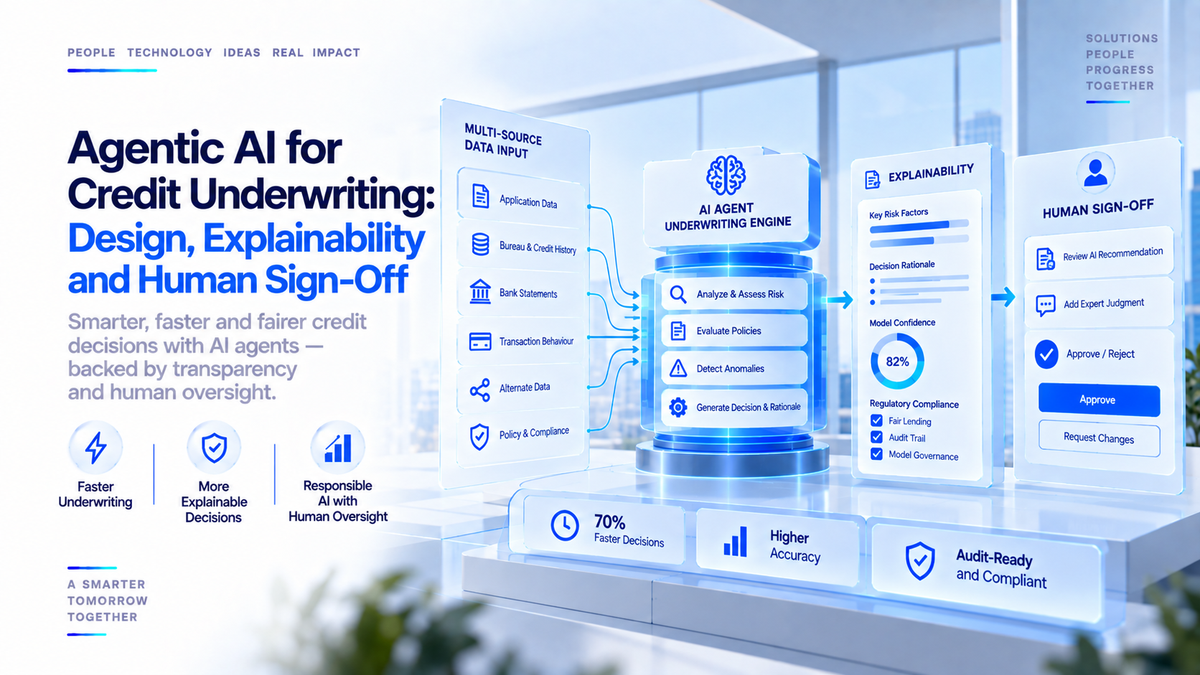
AML screening agents can assist compliance by retrieving the customer profile, collecting approved transaction information, gathering screening results, summarising the case, identifying missing evidence, preparing an investigation package, and escalating to an analyst who remains responsible for the decision, a far better use of AI than asking an LLM for an unexplained compliance verdict.
Reducing drop-off, escalation, security, and rollout
Customer experience and compliance aren't opposites, poorly designed compliance workflows create needless friction, and agentic AI can reduce it by being adaptive: if information is missing, ask for it; if a document is unclear, request another upload; if the application is complete, move forward; if the case is unusual, escalate. That escalation must be explicit, with clear triggers like inconsistent identity information, suspicious documents, unusual data, failed verification, conflicting records, or regulatory exceptions, so routine cases move fast while complex ones reach the right person.
KYC involves highly sensitive data, so the architecture needs least-privilege access, encryption, secure APIs, audit trails, retention policies, access monitoring, and controlled data sharing, with Applore's production guidance treating tools as controlled interfaces rather than giving models unrestricted access, as covered in how enterprise AI agents are built. Implement it by mapping the onboarding journey, identifying repetitive activities, separating routine from exceptional cases, building integrations across KYC, CRM, document, and compliance systems, adding validation so unvalidated model output never becomes a system-of-record update, adding human escalation, and measuring onboarding time, abandonment, verification accuracy, exception rate, manual-review rate, and customer satisfaction. The principle is simple: automate the workflow, preserve the control.
Frequently asked questions
What is agentic AI KYC automation?+
AI agents coordinating multiple KYC and onboarding steps, including document processing, validation, routing, and exception management.
Can AI completely automate KYC?+
It can automate selected workflow steps, but sensitive verification and compliance decisions need appropriate human oversight.
Can AI reduce customer onboarding drop-offs?+
Yes, by identifying missing information and guiding customers through the next required step instead of failing silently.
How can AI agents help AML teams?+
By gathering information, preparing investigation summaries, identifying missing evidence, and routing cases to analysts.
Is document extraction the same as verification?+
No. Extraction reads the data; verification validates whether it's acceptable under the institution's process and rules.
What security does KYC AI need?+
Least-privilege access, encryption, secure APIs, audit trails, retention policies, and access monitoring for sensitive data.